
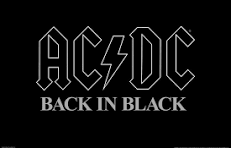
AC/DC Back in Black (1980)
All hail my favorite rock album of all time and the soundtrack of most middle-aged white men’s adolescence. How many times have you heard “You Shook Me All Night Long” in an ‘80s coming-of-age teen film, as the protagonist drives away in a car with the girl no one thought he could get, while the credits start to roll? The eighth studio album from AC/DC in five years, Back in Black, is arguably one of the most iconic rock albums of all time. Born from tragedy, AC/DC’s direct, high-energy, riff-driven formula was on full display, serving as the sound that defined a generation and triumphantly put rock back on its pedestal.
Back in Black is the first album following the sudden passing of lead vocalist Bon Scott, who was found dead in the passenger seat of a car on a freezing February night in 1980, having asphyxiated on his own vomit. Authorities ruled it “death by misadventure.” Bandmates Malcolm and Angus Young coped with the death of their groupmate the only way guitarists can; by shredding some of the greatest riffs the human ear will ever hear, honoring their lost friend—then they immediately began the search for Scott’s replacement. Brian Johnson became the band’s new lead vocalist, and nearly a year after Highway to Hell was released, and only five months after Bon Scott’s death, AC/DC would be damned if they let the money train stop. The first song the group recorded together was “You Shook Me All Night Long,” which would go on to be their biggest hit, becoming a Top 40 hit—something the Scott-era AC/DC had never achieved. “Hell’s Bells” starts the album off with an ominous tone, as Johnson sings, “You’re only young, but you’re going to die,” a reference to Scott’s death, but it’s not a warning or a cautionary tale—it’s more like permission. You can’t spell “death by misadventure” without “adventure,” so if you’re going to tangle with the devil, dine with the Grim Reaper, and flirt with the idea of death, you might as well make it a celebration. “Giving the Dog a Bone” and “Back in Black” scream defiance and give credence to the idea that morality is just a man-made concept. Sex, drugs, and rock & roll; we’re all dogs just trying to get a bone until our day of reckoning comes.
Back in Black was not meant to be a vessel for reckoning; the album was meant to be a reaffirmation of loud, brash, unapologetic, bereaved, unrelenting fun—an album that encapsulates the spirit of rock & roll as we know it. Hang it in the Louvre.

I’m Still in Love with You- Al Green (1972)
If we hang Back in Black in the Louvre, then I’m Still in Love with You needs to be placed in the Guggenheim. Hell, just put it in the Smithsonian, because when the aliens finally come to conquer Earth, “Love and Happiness” might be the only thing that can save us. A favorite of mine since childhood, my appreciation for Al Green’s music comes from my mother, whose love for The Reverend cannot be quantified. If we saw Al Green preach, we would have to remind my mom that she’s in a church; screams would make the Lord uncomfortable with the worship of idols in His house. She’s not the only one, though—this album is a nine-song classic that exemplifies the romanticism prevalent during the soul era. Every single one of our mothers and grandmothers would scream. An album that blends soul, gospel, and R&B so beautifully, sung by a man who’s soft, velvet voice could even tickle the ears of God—it’s no wonder I’m Still in Love with You has stood the test of time.
“I’m Still in Love with You,” “I’m Glad You’re Mine,” “Love and Happiness,” and “What a Wonderful Thing Love Is” are the first four songs on the album. The man came out of the gates absolutely swinging, and I didn’t even mention “Simply Beautiful,” which was song number five. This album is Green’s Mona Lisa, with each song possessing the warmth, sophistication, and vulnerability that made him so popular in the ’60s and ’70s. The title track, “I’m Still in Love with You,” captures the essence of gentle love—a place where tenderness and submission never depart. “Love and Happiness” has one of the most iconic opening lines in music history: “Love and happiness… something that can make you do wrong and make you do right.” Green takes the audience deep into his psyche as we peek into his idea of love—a push and pull that’s capable of bringing unrestrained happiness but also a force that can bring turmoil and even corruption. “Look What You’ve Done for Me” is Green thanking his lover for being the ultimate blessing in his life. The joy, affection, and comfort brought on by simple, devoted love take the listener on a personal journey, making us reexamine what love means in our lives.
I’m Still in Love with You radiates the warmth, soul, and honesty felt in Al Green’s music, exhibiting love in all its forms. This album was solely responsible for the conception of an entire generation, so go out and experience this greatness.
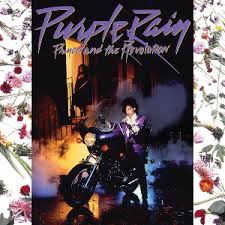
Purple Rain- Prince (1984)
This was a tough one. Originally, this slot was a three-way battle between Purple Rain, Blue by Joni Mitchell, and Bad by Michael Jackson, but after listening to the cohesive arrangement of Prince’s most famous album, it’s no wonder Purple Rain solidified his place as the consensus pop genius of the ’80s. Initially viewed as an androgynous, sex-obsessed, multi-instrument-playing musical genius who refused interviews, stonewalled Dick Clark, and used his musical superpowers solely to set the club on fire, by the time 1984 rolled around, Prince was looking for a change. An innovative jewel that blends pop, R&B, and rock, Purple Rain showcases Prince’s musical range and redefined the boundaries of musical genres, highlighting his bold approach to songwriting.
By 1984, Prince was dissatisfied with how he was perceived in the eyes of the industry at large. Despite his otherworldly talent, he was viewed in the same realm as Rick James—a novelty act that primarily appealed to urban audiences. Even after the success of “Little Red Corvette,” which peaked at number 6 on the Billboard Hot 100, Prince was still looking for the album that would speak to an entire generation. Purple Rain is a sonic experience that diverges from the reclusive, extraterrestrial persona Prince usually exhibited; it serves as an origin story loosely based on his real life, giving the audience a peek into who Prince might be.
“Let’s Go Crazy” opens the album, with Prince crooning into the audience’s ear with a spoken-word introduction, quickly building into an exhilarating anthem. “When Doves Cry” is a confessional and Prince’s most personal record to date: “Maybe I’m just like my father / Too bold / Maybe you’re just like my mother / She’s never satisfied.” Here, Prince reflects on the complexities of love and turmoil shown in his parents’ marriage, suggesting that the generational patterns of pain persist in his relationships as well. “I Would Die 4 U” expresses sacrificial devotion to one’s partner. A celebration of love and loyalty, this song exemplifies Prince’s fascination with spirituality and the idea that love can transcend into something greater. Following that is “Baby I’m a Star,” which is Prince’s declaration of his ascent into the pantheon of musical greats, urging us to get on board or be left behind.
Purple Rain is a monument that represents the peak of Prince’s musical prowess. A timeless masterpiece that captivates audiences to this day—why not have Prince’s greatest achievement in your collection?
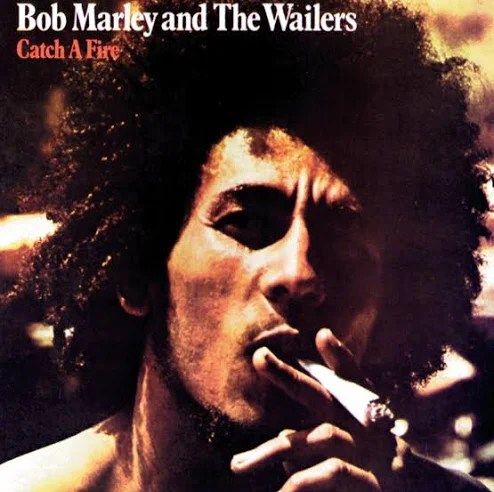
Catch A Fire- Bob Marley (1973)
As a child, reggae was a staple of my upbringing. Once again, my mother played reggae so much that I’m honestly shocked my siblings and I weren’t walking around the house speaking patois. Catch a Fire was an album that shaped my childhood, an album that helped Bob Marley & The Wailers achieve international success while turning Marley into a pop culture icon. Catch a Fire is an iconic piece of art that deserves to be in any collection. Considered the album that facilitated reggae’s arrival into the mainstream, Marley’s ability to layer social commentary over infectious bass lines and groovy guitar riffs produced a polished reggae sound that resonated with audiences worldwide. A symbol of revolution, justice, and peace, Marley’s message of love, unity, and resistance has captivated audiences long after his death, with his words still used to address political and social issues today.
The group originally recorded their classic set of songs in Jamaica, with the tapes then being sent to London, where producer and founder of Island Records, Chris Blackwell, remixed them. Adding rock-style guitars and keyboards to appeal to a broader audience—despite the band’s initial objections—this addition created an album that redefined and transcended the genre of reggae. The opening track, “Concrete Jungle,” features a minute-long guitar riff, adding raw emotional depth that sets the tone for the album. “Slave Driver” and “400 Years” are politically driven proclamations about the oppression faced by people of African descent. An unapologetic and direct Marley sings with an intensity that matches his anger at persecution. My favorite song, “Baby We’ve Got a Date (Rock it Baby),” is a cheerfully infectious tune that showcases Marley’s ability to create a lighthearted, romantic environment for the audience.
Catch a Fire is, in my opinion, Marley & The Wailers’ best work—a landmark album that allowed the whole world to celebrate reggae music. A timeless classic, the spirit of love, resilience, and unity that defines Bob Marley’s legacy can be heard in all eleven songs.

The Divine Feminine- Mac Miller (2016)
This one hurt. I was debating whether to put Mac on here due to how incredibly hard it is for me to listen to his music, even six years after his passing. The impact Mac’s music had on me was immense. I could always reflect on Mac’s struggles with mental health and sobriety, with every song being a haunting reminder of what could come next if certain issues weren’t resolved. The Divine Feminine is Mac reaching his pinnacle, but it’s also a sad reminder that some of the greatest geniuses are fueled by their demons, which they can never fully outrun or escape—an early death is truly the only option. This album isn’t Mac’s attempt to be a feminist icon, as it doesn’t discuss feminism. Instead, The Divine Feminine explores the delicateness of love and distance, dissecting romance and connection in an attempt to understand the universe in a broader sense. Let’s dive into my favorite Mac Miller album of all time.
The Divine Feminine is the manifestation of Miller’s beliefs about love. “I want people to put on the record and it’s a date in itself,” Miller told I-D in a 2016 interview. “I want people to love this record and realize they can love to it.” Miller shares his ideas of connectivity and togetherness—closing the gap, being in unison, but potentially growing apart—as part of human nature. The album beautifully blends hip-hop, R&B, and jazz, taking the audience into a sea of sensuality and romance and eventually immersing us in the power of feminine energy.
“Stay” is my favorite song on the album. Featuring an opening trumpet riff by Trombone Shorty, “Stay” is Miller vocalizing his desire for stability, a need for closeness, and a fear of vulnerability. The complexity of love and the anxieties we hold are on full display. “Dang!” is a House-R&B fused masterpiece produced by Kaytranada, with Anderson. Paak’s silky voice on the hook. It explores the ups and downs of relationships, showing that the turmoil in Miller’s mind is all part of the growing process. “God Is Fair, Sexy Nasty” reflects the broader fusion of the jazz-rap movement of the mid-2010s. Featuring Kendrick Lamar, who became the face of this movement, the song delves into the divine nature of intimacy, femininity, and the spirituality that can be found in one’s sexuality.
This album shows Mac’s evolution as an artist and his ability to paint a picture of soul, spirituality, and romance in a heartfelt way that has resonated with audiences of all backgrounds. Rest easy, Mac. Rest easy.


Once again Jordan!! Excellent!!
LikeLike
brilliant and as a 58 year old Jamaican born man I agree with every word. There is nothing like great music regardless of the genre.
LikeLike