
Love Deluxe- Sade
If you’re looking for an album to listen to while soaking in a bubble bath, surrounded by candles with a glass of Merlot in hand, this is the perfect choice. Sade’s fourth studio album, Love Deluxe, is an infusion of Quiet Storm R&B, jazz, and soul that takes the listener through lead singer Sade Adu’s ideas on love, heartbreak, and resilience.
“The idea is that it’s one of the few luxury things that you can’t buy,” Adu said in an interview back in 1992. “You can buy any kind of love, but you can’t get Love Deluxe.” “No Ordinary Love” encapsulates Adu’s feelings of heartache and desire, presenting love as a sacrificial devotion that consumes the soul. Although the reality of love may hurt, the idea of love is too powerful to let go. “I gave you all that I had inside, and you took my love, you took my love,” Adu sings, as the band builds a sea of emotion that magnifies her voice. Adu’s exceptional storytelling shines in songs like “Feel No Pain,” which describes the crippling effects of unemployment, and “Pearls,” which tells the story of a Somali woman struggling for survival.
Over 30 years later, Love Deluxe stands the test of time as a beautifully crafted, emotionally honest album that gets better with every spin.
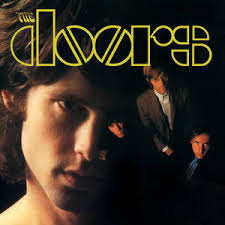
The Doors- The Doors
Growing up as the son of a mother who would have been at Woodstock ‘69 without a doubt, artists like The Doors, The Beatles, and Jimi Hendrix were staples of my childhood. When I was a kid, my older brother and I used to call The Doors “Scooby-Doo music” because we thought that “Break on Through (To the Other Side)” sounded like the music that played when Scooby and the gang were being chased by the bad guy. It wasn’t until my college years that I became truly captivated by an album hailed as a benchmark of the psychedelic era, with lead vocalist Jim Morrison serving as the face of a generation and capturing the spirit of late 1960s America with his iconic voice.
In contrast to The Beatles, who preferred to highlight the sunnier side of humanity, The Doors took listeners to the dark side of the moon, creating what one could describe as an experimental, haunting experience. “Back Door Man,” originally written and performed by blues legends Willie Dixon and Howlin’ Wolf, is Morrison’s acid-drenched ode to the blues. The track exemplifies Morrison’s defiance and unrestrained energy, the howl of a man famous for challenging societal norms. Songs like “Light My Fire” and “Soul Kitchen” take listeners on a cosmic journey, with Ray Manzarek’s keyboard, John Densmore’s drumming, and Robby Krieger’s guitar opening up another dimension in the listener’s mind.
Jim Morrison released six albums with The Doors before his death in 1971, but this psychedelic masterpiece remains the group’s greatest triumph and the voice of a generation.
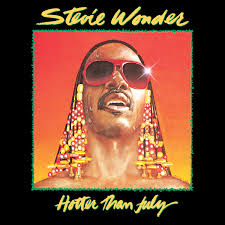
Hotter Than July- Stevie Wonder
Any album that includes “All I Do” and “Rocket Love” should, in my opinion, should be in everyone’s top 10 list. Wonder’s 19th studio album, Hotter Than July, reached #3 on the U.S. album charts and #2 in the U.K., marking the beginning of his most successful period internationally. One fun fact about this album is that a young Off the Wall-era Michael Jackson sang backup vocals on “All I Do,” which is like 1992 Michael Jordan teaming up with a rookie LeBron James.
The run Wonder went on between 1973 and 1976 will never be replicated. He won the Grammy for Album of the Year for three consecutive albums: Innervisions (1973), Fulfillingness’ First Finale (1974), and Songs in the Key of Life (1976) the only artist to ever accomplish this. Wonder’s 1979 release, The Secret Life of Plants, fell flat compared to his previous albums due to its experimental, heavily instrumental nature. However, it was one of the first albums to be digitally recorded, setting the tone for Wonder and Sony heading into the 1980s.
“All I Do” exemplifies Wonder’s exceptional songwriting and his brilliant ability to fuse R&B, soul, and pop effortlessly. “You made my soul a burning fire / You’re getting to be my one desire” is how he starts the damn song, as if you didn’t think he would be as the kids like to say, “in his bag.” “Do Like You” illustrates why Wonder is regarded as one of the greatest vocal talents of the 20th century, showcasing his ability to bend words and use lyrical repetition—not for mere repetition, but to evoke a deeper, more urgent feeling with each word. “Master Blaster (Jammin’)” highlights Wonder’s creative exploration and growth in the ’70s, culminating in this Bob Marley-inspired track.
This album stands the test of time, holds up as one of Wonder’s greatest works, and ushered in the “commercial” period of his career. Once again All I Do is on this, so get it.
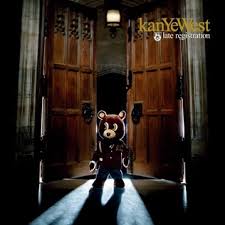
Late Registration- Kanye West
Back in 2021, my older brother and I endured a 27-hour car trip from Atlanta to Las Vegas because I had accepted a job offer there. As we departed from Georgia, drove through Alabama, and entered the abyss that they call the United States Midwest, we knew we had to play an album that’s such staple of our childhood we use Pre-Late Registration (PLR) and After-Late Registration (ALR) as units of time to date history. Late Registration was the first album my mom allowed me to buy with my own money. Naturally, it had to be the clean Walmart version because Mrs. Dorsey wasn’t playing any games. I was an adorable, innocent seven-year-old boy, forever changed the first time I put that disc into my CD player and heard the words, “If you ain’t no punk, holla, ‘We want prenup! We want prenup! Yeah!’”
Look, Late Registration is something that you need to have, because when she leaves your ass, she’s gonna leave with half. A 21-track masterpiece that reinvented the wheel in terms of production. Sampling has always been used in hip-hop, but Kanye’s use of samples in this album brought his vision of a grandiose, expansive, imperfect masterpiece to life. “Diamonds From Sierra Leone” takes the listener through a spiritual experience, immersing the audience in West’s bravado, self-importance, and arrogance, underscoring that “it costs to be the boss.” “Heard ‘Em Say,” the opening song featuring Maroon 5’s Adam Levine, offers insight into why people sell their souls. “The prettiest people do the ugliest things” resonates in a world where it seems like the only way to progress is to manipulate, acquiesce, betray, and compromise our morals.
Late Registration revolutionized hip-hop and elevated Kanye into the stratosphere alongside rap greats like Jay-Z, Nas, Biggie, and Tupac. It even introduced the sub-genre of nerd-rap into the mainstream, which would become popular in the mid to late 2000s (shoutout to Atmosphere and MC Chris). This album dropped in 2004—18 years before everything that would unfold in 2022—so please, let me have this one.
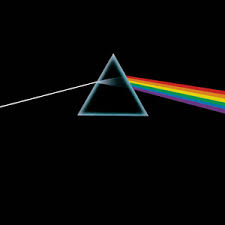
The Dark Side of the Moon- Pink Floyd
Yes, just yes. If you thought I was going to leave off arguably the most influential rock album of all time, then I have beachfront property in Colorado to sell you. This is the gold standard, the benchmark of rock; everyone tries to imitate it, but none can replicate the magic of an album that remains a permanent fixture in the rock canon. In other words… this shit slaps. Originally, Roger Waters was irritated by the “space rock” label, as no artist wants to be classified so generically, but over time, the band grew to embrace the idea. Eighteen years after the album’s debut, Pink Floyd’s official tour T-shirt read “Pink Floyd: Still First in Space,” celebrating the band’s journey into the cosmos and its pioneering of the psychedelic, space rock sound that’s still popular today.
The Dark Side of the Moon is a sonic journey through the human conscience, presenting the battle of light versus darkness. The album’s sense of existential dread—what one might call doomerism—captures the prevailing mindset of the time. In life, some light trickles in, but the moment air fills our lungs, innocence is lost, and we spend the rest of our days fighting against time, death, politics, religion, and money. This battle culminates in either an existential collapse, as heard in “Eclipse,” or some sort of supernatural experience, as heard in “Brain Damage.” The album also opposes the ideas of time, consumerism, greed, and isolation, all prevalent during that era. “Time” speaks to wasting one’s youth, the potential loss when we allow the world to pass us by, thinking we have all the time in the world to become our true selves. “Money” is the band’s celestial rendition of the blues, serving as a critique of the irony behind the pursuit of wealth, with capitalism, in Waters’ eyes, eventually leading to the isolation of man—followed by some of the most remarkable riffs that could raise a dead body from the grave.
The Dark Side of the Moon spent 39 weeks on the Billboard 200 Album Chart during an era that featured acts such as Led Zeppelin, The Rolling Stones, The Beatles, Elton John, Alice Cooper, Stevie Wonder, and The Jackson 5, and it’s not hard to see why. The innovative production moved the entire genre of rock forward, while the cohesive storytelling confronted ideas about human existence rarely heard in mainstream music at the time. This album is a testament to Pink Floyd’s genius and their ascent into space.

 850 Media
Jordan
Well done! Can’t wait to see Part 2!!
LikeLike